
All eyes will be on whether Sitharaman provides the much-expected tax relief for the middle class, leaving more money in their hands, as there is tax buoyancy

Finance Minister (FM) Nirmala Sitharaman has presented a forward-looking Budget, reinforcing the government's commitment to 'Reform, Perform, and Transform'.

Moody's Ratings on Tuesday projected general government debt to stabilise above 80 per cent of GDP over the next three years, down from 89.3 per cent in 2020-21. "General government interest payments to fall to around 24 per cent of general government revenue over the next two years from over 28 per cent in fiscal 2020-21, although this remains much higher than the median 8.7 per cent recorded by Baa-rated peers," Moody's Ratings associate managing director Gene Fang said in a post-Budget reaction.

India's economy is likely to grow by 6.5 per cent in the current and the next financial year, an EY report said, attributing lower than anticipated expansion in the September quarter to fall in private consumption expenditure and gross fixed capital formation. Real GDP growth eased to a seven-quarter low of 5.4 per cent in July-September -- the second quarter of the current 2024-25 fiscal year.

The central government is on track to meet its fiscal deficit target of 6.4 per cent of the GDP for 2022-23 on the back of strong growth in revenue collections, the World Bank said in its India Development Update on Tuesday. High nominal GDP growth in the first quarter supported strong growth in revenue collection, especially Goods and Services Tax (GST), despite tax cuts on fuel. Notwithstanding an increase in spending due to expanded fertilizer subsidies and food subsidies for vulnerable households in response to the commodity price shock, the government is on track to meet its FY22/23 fiscal deficit target of 6.4 per cent of GDP and the general government deficit is projected to decline to 9.6 per cent from 10.3 per cent in FY21/22 and 13.3 per cent in FY20/21.

At the grassroots level, CA reported an increase in registered participation in community cricket from 627,793 to 661,161, although there was a 3% drop in the number of junior cricketers.

The Union government's fiscal deficit further widened to Rs 9.53 lakh crore, which is nearly 120 per cent of the annual budget estimate, at the end of October of the current financial year, according to official data released on Friday. The deficit widened mainly on account of poor revenue realisation. The lockdown imposed to curb spreading of coronavirus infections had significantly impacted business activities and in turn contributed to sluggish revenue realisation.

The road ahead will require navigating complex financial challenges while fostering job creation and sustainable development in the region.

Gold prices could hit the $3500 an ounce (oz) mark in the next 18 months - up around 13 per cent from the current levels - given the global uncertainties and aided by investment demand, said analysts at BofA Securities in a recent note. Uncertainty around Trump Administration trade policies, BofA said, could continue to push the US dollar (USD) lower, further supporting gold prices near-term.

Singaporean brokerage DBS said in a report that it expects exports to pick up once the GST-driven distortions subsided, but it warned that the traditional product mix will hinder its ability to participate in the ongoing trade upturn.
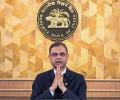
'A repo cut will be very good for the market as it will mean that everything is being done to spur growth in these uncertain times.'

The government does not seem keen on issuing fresh gold bonds given the overall cost and rising gold prices.

Finance Minister Nirmala Sitharaman on Tuesday termed misleading claims by opposition leaders that if any state is not named in the Budget speech, then it does not get any budgetary allocation. Replying to a Budget discussion in the Lok Sabha, Sitharaman asserted that no state was being denied money. She recalled that in the past Budgets by the UPA government also did not mention names of all states in their Budget speech.

'The Budget must be pro-growth, focusing on infrastructure creation while also managing the fiscal deficit.'

This will be the first full-year Budget of the BJP-led National Democratic Alliance government since it came to power for a third consecutive term in July last year.

Advance estimates on Tuesday estimated nominal GDP this financial year to be slightly less than that projected in the Budget, and this would magnify fiscal deficit as a portion of GDP.

There are challenges galore before him, and it is not going to be easy. In the next four years, he has to conjure a system that changes the optics about him and the BJP both nationally and internationally so that he can ride back on his own, claim the top slot, and not have to lean on a coalition, asserts Ramesh Menon as Modi 3.0 completes a year in power.

Russian shipments averaged 1.67 million barrels per day in January compared to 1.48 million bpd in December and 1.53 million bpd a year earlier.
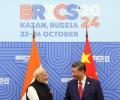
'Don't play the American game... India is too big for a US game.'
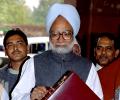
'We are going to need more technical people in government.' 'You can't expect a generalist to understand the complicated world of financial engineering.' 'I regret to say that most of our politicians have no competence to deal with these things. Nor is there a willingness to learn.'

Schemes like the Mukhyamantri Majhi Ladki Bahin Yojana strain fiscal resources amid rising unemployment and prices of food items.

'As the global economy undergoes significant transformations in 2025, India's ability to navigate the complexities of trade wars, financial realignments, and emerging blocs will be pivotal,' explain Harsh V Pant and Soumya Bhowmik.
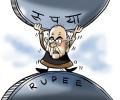
For the first eight months of the current financial year, the figure stood at Rs 7.17 trillion.

At a meeting of the Institute of International Finance, a global association of financial institutions, Standard Chartered Bank Chief Economist, Gerard Lyons, raised doubts over the Centre's projections of reducing fiscal deficit from 2010-11's estimate of 5.1 per cent. "I am skeptical whether fiscal deficit can be reduced as planned," he said.

While this will incur a revenue loss amounting to 0.2 per cent of GDP, it will provide a strong boost to consumer sentiment and spending, points out Rajani Sinha.

'Spend, but create assets, spend but make sure that people benefit from it.' 'This has been a beautiful guiding principle. And I think as a finance minister I owe so much to the prime minister for keeping this path clear before us.'

If Beijing succeeds in this multipronged effort to challenge the current dominant power, it will have not just economic but political and security consequences. There is no let-up in the South China Sea nor any de-escalation moves on the India-China border. This portends to ominous signalling from Beijing, observes China expert Srikanth Kondapalli.

Few finance ministers announce any taxation measure that could upset the stock market. Ms Sitharaman decided to take that risk, observes A K Bhattacharya.

In absolute terms, revenue receipts stood at Rs 9.07 lakh crore at the end of October. For the entire 2019-20, the revenue receipts have been pegged at Rs 19.62 lakh crore.

'The problem is that the bubble may not only be in valuations, but also in investors' minds.'

Dr Manmohan Singh first embossed himself on the national consciousness when as India's finance minister he flagged off economic reforms which changed this nation forever.
Ask rediffGURU and PF and MF expert Janak Patel your mutual fund and personal finance-related questions.

India will be the world's third-largest economy by 2028 as it becomes the world's most sought-after consumer market and gains share in global output, driven by macro stability influenced policy and better infrastructure, Morgan Stanley said. From a $3.5 trillion economy in 2023, the Indian economy is projected to expand to $4.7 trillion in 2026, which will make it the fourth largest in the world behind the US, China and Germany.

Headline growth was quite weak heading into the Covid period but averaged 6.4 per cent and 6.7 per cent in the five years between FY16 and FY20 for GVA and GDP respectively, points out Abhishek Upadhyay.

At a combined level, the fiscal deficit of the Centre and states together will come at 12.1 per cent, with the states contributing 4.5 per cent.

'When Prime Minister Modi met President Trump, they agreed to initiate a bilateral trade dialogue.' 'It makes sense to give these negotiations a chance.'
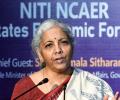
'Each state is unique, but when it comes to finance, the fundamentals cannot be different.'

'If such inflows materialise, what will be the effect on the rupee's value -- and therefore on exports growth, the only sustainable path to recovery?', asks Mihir S Sharma.

India's demographic advantage and diverse economic landscape position it uniquely to benefit from AI, the Economic Survey for 2024-25 tabled in the Parliament on Friday afternoon asserted. However, achieving these benefits requires significant investments in education and workforce skilling, supported by enabling, insuring, and stewarding institutions, the state of the economy report tabled by Finance Minister Nirmala Sitharaman said.
Several critics including some rating agencies have doubted prospects of meeting this ambitious fiscal deficit target.
